

Kids Education
Technical Description
Kids Education at a Glance
Kids education is the single largest demand driver in the craft kit category, and it behaves differently from gift or hobby buying. Educational buyers — school districts, after-school programs, STEAM enrichment providers, children's museums, library systems and homeschool co-ops — purchase on a curriculum calendar, not an impulse cycle. They buy in classroom multiples (24, 30, 36 units), they need every component to survive being handled by thirty pairs of eight-year-old hands, and they require documentation: CPC certificates, CPSIA lead and phthalate test reports, EN 71-1/2/3 results for EU-bound goods, and small-parts warnings appropriate to the stated age grade. A craft kit sold into education is not a craft kit with a worksheet stapled to it; it is a lesson delivered in a box, with a defined learning outcome, a 30–45 minute completion window, and enough consumable spares that a broken piece doesn't derail a class.
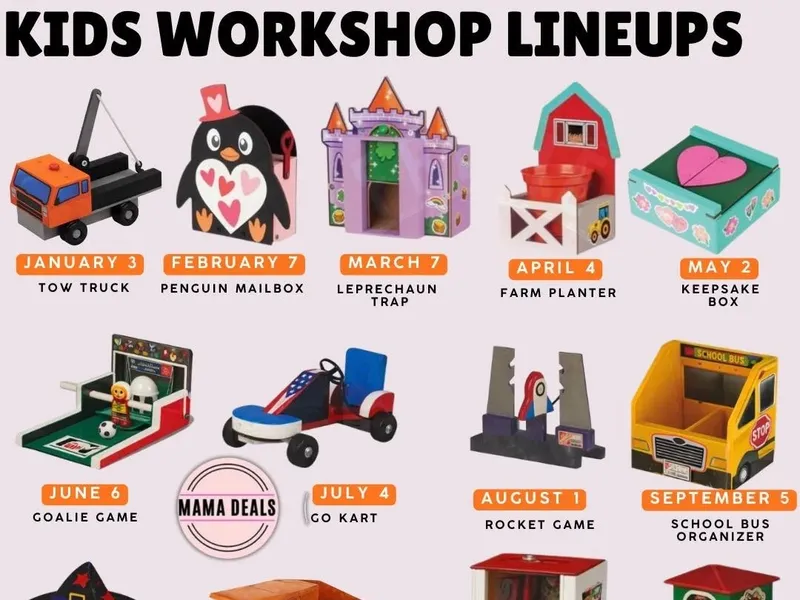
Market demand has shifted decisively toward hands-on, screen-free learning since 2021, and that shift has held. Retail partners are seeing sustained double-digit growth in the "educational craft" subcategory on Amazon, where listings that surface teacher-facing language — "classroom pack," "STEAM activity," "fine motor skills," "ages 6-10" — consistently outperform generic craft listings on conversion. Subscription box operators serving the 5-12 age band now treat educational framing as table stakes rather than a differentiator. Meanwhile, big-box experiential programming has legitimized the format for parents at scale: Home Depot Kid's Workshop Kits 2026 - Wholesale Bulk Children's Craft Activity Sets demonstrate exactly how a simple, well-engineered build-it project functions as both a marketing vehicle and a genuine skills lesson, and that model is now widely imitated by regional hardware chains, garden centers and toy retailers running their own weekend workshop programs.
Buying trends favor three things right now: bulk classroom formats over single-child retail packaging, reusable or refillable systems that lower per-session cost across a school year, and multi-skill kits that let one purchase cover several curriculum objectives. Buyers are also increasingly sensitive to material story — FSC-certified wood, recycled paper pulp, water-based non-toxic paints, and reduced plastic packaging now appear in RFPs from school districts and larger subscription operators. Price sensitivity is real but not absolute; educational buyers will pay a 15-25% premium over a comparable consumer kit if the documentation, durability and instructional quality justify it in a procurement review.
Best-Selling Kit Types
- Woodworking & Build-It Workshop Kits — pre-cut, pre-drilled wood components with child-safe fasteners, modeled on the hardware-store workshop format. Toolboxes, birdhouses, planters, race cars, picture frames. Highest perceived value per dollar, excellent for event programming and workshop series.
- Classroom Sewing & Felt Craft Packs — blunt plastic or rounded-tip metal needles, pre-punched felt shapes, embroidery hoops and yarn. Draws directly from our Sewing & Bag Making Kits range and is a reliable seller into ages 7+ for fine motor development and sequencing skills.
- STEAM Engineering & Circuit Kits — simple circuits, levers, pulleys, catapults, and hydraulic arm builds paired with a worksheet explaining the principle. Command the strongest margins because the educational justification is explicit.
- Seasonal Holiday Craft Bundles — Christmas ornaments, Halloween masks, Easter decorating, Valentine's cards. Predictable, high-volume, and the easiest entry point for new buyers testing a supplier relationship.
- Multi-Project Activity Boxes (10-in-1 / 20-in-1) — a single SKU covering an entire term of weekly sessions. Strong for after-school programs and subscription operators who need variety without managing twenty purchase orders.
- Fine Motor & Early Years Sets — lacing cards, bead threading, pom-pom sorting, dough tools for ages 3-5. Simple to manufacture, extremely durable, and a consistent repeat-order category for preschools and daycare chains.
Wholesale Considerations
| Factor | Guidance |
| MOQ | Standard stock kits start at 500 units per SKU; mixed-color or mixed-design assortments accept 300 units per variant against a 1,000-unit total order. Fully custom OEM development requires 1,000-2,000 units per SKU to amortize tooling and die-cutting. Sample orders of 5-20 units ship in 7-10 days. |
| Packaging | Choose format by channel. Retail: full-color printed box with hang tab, ~$0.35-0.80/unit added cost. Classroom bulk: polybagged component sets in a master carton, cutting packaging cost to $0.08-0.15/unit and freight volume by 30-40%. Amazon FBA requires FNSKU labeling, poly-bag suffocation warnings, and ISTA-6 drop testing on the master pack. |
| Seasonal Timing | Back-to-school orders must be confirmed by mid-March for August delivery. Q4 holiday programs place by late June to clear production before the peak-freight window. Build in a hard buffer around Chinese New Year — factories close 3-4 weeks from late January, and capacity is constrained for 2-3 weeks either side. |
| OEM/Customization | Logo printing, custom instruction sheets and co-branded packaging add 7-12 days to lead time with no per-unit tooling above 1,000 units. Custom die-cut wood or injection-molded parts carry $300-1,500 in one-time tooling and add 15-20 days to the first run. Bilingual or multi-language instruction inserts are a low-cost, high-impact upgrade for EU and LATAM distributors. |
| Margin Notes | Typical FOB pricing runs $1.80-4.50 per kit depending on component count and material. Retail keystone lands at 3.5-4x FOB; Amazon sellers should model 2.8-3.2x after FBA fees and PPC. Classroom bulk formats trade 8-12 points of gross margin for 3-5x order volume and materially higher reorder rates. |
Sourcing & Supply
Working with a Chinese manufacturer on educational kits is fundamentally a documentation and consistency exercise rather than a price negotiation. The lowest quote in your inbox is rarely the lowest landed cost once you account for failed compliance testing, component shortfalls discovered mid-classroom, and reprints of instruction sheets that were translated poorly. KitSnest operates a controlled component supply chain across our Kids Craft Kits, Sewing & Bag Making Kits and seasonal ranges precisely because educational buyers reorder — a district that runs your kit successfully in September will order again in January, but only if every box in the first shipment contained every part. Establish your specification, lock your approved sample, and treat it as the contractual reference for every subsequent production run.
- Quality control — insist on a golden sample signed off by both parties, plus AQL 2.5 inspection on major defects and AQL 1.0 on critical safety items (sharp edges, small parts, needle tips). Request in-line inspection photos at 30% and 70% production completion rather than waiting for a final report. For any kit graded under age 6, confirm small-parts cylinder testing has been performed on the actual production batch, not the prototype.
- Lead time — 25-35 days for stock designs, 40-50 days for OEM programs with custom packaging, 55-70 days where new tooling is involved. Add 10-14 days for third-party lab testing if you require fresh CPSIA or EN 71 certificates under your own brand name. Working backward from a school delivery date, place orders 90-100 days ahead.
- Shipping — sea freight from Ningbo, Yiwu or Shenzhen runs 28-38 days to US West Coast and 32-42 days to Northern Europe, and is the only economical option above 3 CBM. Air freight at 6-9 days makes sense for sample runs, replenishment of a fast-moving SKU, or recovering a missed seasonal window. Consolidate multiple SKUs into a single container to reduce per-unit freight by 20-30%.
- Compliance and continuity — hold your test reports, artwork files and bill of materials in a shared, versioned folder with your supplier. Confirm component sourcing is dual-supplied for critical items like wood blanks and cotton fabric so a single upstream shortage doesn't stall your entire program.
Need Kids Education Solutions?
Our team can develop custom craft kit solutions for your specific kids education requirements.
Request a Quote