
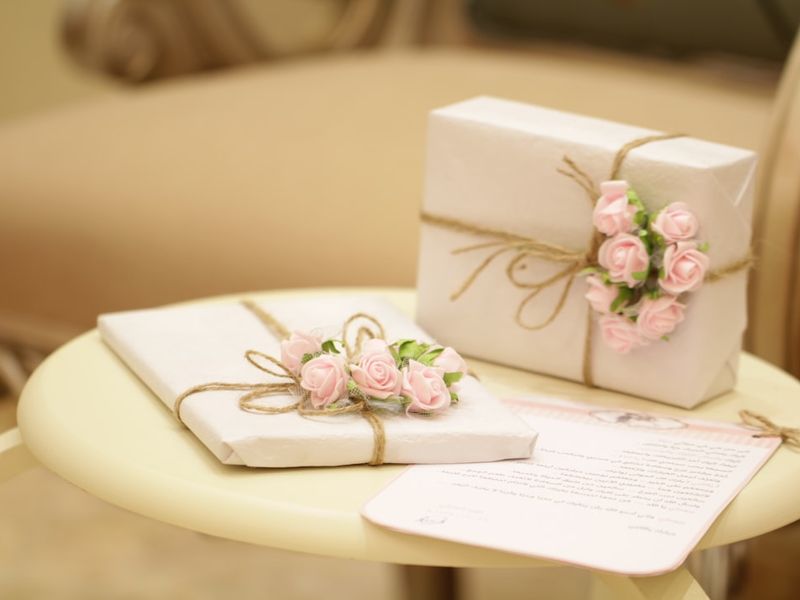
Home Decoration
Technical Description
Home Decoration at a Glance
Home decoration has become one of the highest-velocity end-uses in the craft kit wholesale market, and it is easy to see why. Unlike apparel or toys, home décor sells year-round across every major channel: Amazon sellers need photographable SKUs that convert in search results, gift shops need impulse-priced shelf pieces, subscription boxes need monthly themes that don't repeat, schools need structured hands-on projects, and distributors need categories with steady reorder cycles. A well-designed decoration kit sits at the intersection of all five. Consumers get the satisfaction of "I made that myself," retailers get a story-driven product that justifies a premium over mass-produced décor, and buyers get SKUs with strong visual differentiation instead of another indistinguishable ceramic vase.
Demand is being driven by a lasting shift in how shoppers furnish and refresh their homes. Post-pandemic, consumers redecorate more frequently and spend more on small, personal touches than on big-ticket furniture; rental and first-home buyers want pieces that express personality without permanent commitment. Social platforms have amplified the trend — short-form "decor DIY" content consistently outperforms, and aesthetics like cottagecore, grandmillennial, and warm minimalist styling all feed the same appetite: natural materials, handmade texture, and warm lighting. Preserved botanicals, resin miniatures, and layered paper pieces photograph beautifully both in unboxing content and styled in a finished room, which makes them self-promoting for resellers. That organic reach lowers customer acquisition cost, which is precisely why Amazon sellers and subscription box brands keep expanding this category.
Buying trends worth planning around: elevated natural materials (preserved flowers, real wood, glass) over plastic; light-up and ambient pieces that add function; seasonal rotation with at least four drops per year; gender-neutral, giftable packaging; and kits that deliver a "wow" finished piece in under an hour. Wholesale buyers should also note that home decoration kits carry higher perceived value than kids' crafts — the same box that retails at $9.99 as a children's activity easily supports $24.99–$39.99 as a décor item when framed and marketed to adults. KitSnest's Floral Craft Kits, Seasonal Craft Kits, and Paper Craft Kits categories cover the core of this demand, and each has a distinct buying calendar, price structure, and audience you can target.
Best-Selling Kit Types
- Preserved Flower Glass Dome Kits — The flagship of the home décor segment. Real preserved botanicals under a glass cloche read as "boutique décor," not "kids' craft," which supports strong retail margins. The Preserved Dry Flowers Glass Dome Ornament DIY Craft Kit for Wholesale is a proven mover in this slot: domes are gift-shaped, photograph well under natural light, and work year-round — florals sell for Mother's Day, weddings, housewarmings, and autumn tones carry into the holidays.
- Resin Light-Up Miniature Village Sets — Tabletop scenes with LED lighting are the fastest-growing seasonal décor SKU in the category. The Resin Light-Up Christmas Village House Set 12-Piece Miniature Décor anchors this line: a 12-piece set gives buyers a complete display out of one box, the light-up feature drives gift purchases, and the set format lifts average order value versus single-piece ornaments. Seasonal windows are tight, so these need the longest lead-time planning of any kit type.
- Paper Flower & Wall Art Kits — Crepe and textured paper florals mounted in hoops, frames, or garlands. Low material cost, high perceived value, and near-zero breakage in transit make these the best margin-per-cubic-foot option in the Paper Craft Kits category. They sell steadily year-round with peaks in spring and the wedding season.
- Dried Flower Press & Frame Kits — Pressing kits with a finished frame deliver the "slow craft" story that sells to adults and schools alike. Strong repeat-purchase behavior: customers buy a second frame to complete a set. Pairs naturally with the Floral Craft Kits category for bundle offers.
- Seasonal Wreath & Tabletop Kits — Pre-cut felt, faux evergreen, and dried-grapevine bases that assemble into wreaths, centerpieces, and mantle décor. Three clear selling windows — fall/Halloween, Christmas, and spring — let you rotate the same SKU infrastructure across three price points.
- Candle & Lantern Décor Kits — Decoupage, resin-pour, or pressed-flower candle kits with reusable glass holders. Strong gifting angle, strong add-on sales to the dome and village lines, and a natural fit for the Seasonal Craft Kits catalog in Q4.
Wholesale Considerations
| Factor | Guidance |
| **MOQ** | Standard MOQs start at 300–500 units per SKU for stock kits; mixed-model MOQs of 1,000–2,000 units across a line unlock the best per-unit pricing (typically 15–25% lower). Custom packaging and OEM versions usually require 1,000+ units per design. |
| **Packaging** | Glass dome and resin pieces ship in individual foam-lined or partition boxes; plan on 30–40% higher packaging cost than flat paper kits. Retail-ready packaging (window box, hang tag, instruction card) adds roughly $0.30–$0.80 per unit but materially lifts sell-through on Amazon and gift-shop shelves. |
| **Seasonal Timing** | Light-up Christmas lines need production slots booked 6–8 months out — resin curing and LED assembly make them the slowest SKUs. Place Q4 orders by March–May for sea freight; air freight is a fallback for late orders at 3–4× the freight cost. Floral and paper kits tolerate tighter timelines of 8–12 weeks. |
| **OEM/Customization** | KitSnest offers OEM on box branding, instruction booklets, colorways, and component swaps. Lead time adds 10–15 days for artwork approval and sampling. If you already sell décor, custom colorways and your own box art are the highest-ROI customization — they justify a higher MSRP than unbranded stock. |
| **Margin Notes** | Typical landed cost runs $3.50–$7.50 per dome kit, $8–$14 per 12-piece resin set, and $1.80–$4.00 for paper kits, before freight. At retail of $24.99–$39.99, gross margins of 55–70% are realistic for Amazon sellers; subscription boxes typically buy at 40–50% below retail MAP and still hold healthy margins because kits eliminate separate gift-wrap costs. |
Sourcing & Supply
Working directly with a Chinese manufacturer — rather than a trading middleman — is what separates profitable décor kit lines from margin-drained ones. KitSnest operates its own production for floral, paper, and resin assembly, which means one accountable partner for sourcing preserved botanicals, resin casting, LED component sourcing, and box printing. The practical workflow is: request samples of the stock lines you intend to carry (expect 7–10 days for samples by express courier), negotiate MOQ and landed cost per unit, approve a pre-production sample for any custom elements, then lock production slots around your seasonal calendar. Direct factory relationships also give you access to component-level cost breakdowns, which is essential when you need to hit a specific price point such as a $5.99 landed cost for a $19.99 retail item.
- Quality control — Demand pre-shipment inspection on every order: for glass domes, check adhesive bonds, dome sealing, and packaging compression; for resin sets, check LED function, battery housing, and paint consistency across the 12 pieces. KitSnest standard QC includes an inline check at production and a final AQL 2.5 inspection before container loading.
- Lead times — Stock floral and paper kits: 15–25 days after order confirmation. Resin light-up sets: 30–45 days due to curing and electrical assembly. OEM programs add 10–15 days. Always add 5–7 days of buffer for holiday windows — a late Christmas line misses the entire selling season.
- Shipping — For 20- and 40-foot containers, sea freight is the standard: 25–35 days to US West Coast ports, 35–45 days to East Coast. Air freight and express couriers cover urgent restocks at 3–5× the cost. For first orders, DDP or door-to-door terms simplify landing costs; established importers often prefer FOB with their own forwarder.
- Planning cadence — Book Q4 seasonal production in Q1, order floral lines 3–4 months before spring peaks, and keep one evergreen stock line (domes, paper florals) on a quarterly reorder cycle so you are never paying air freight on your best sellers.
Related Products (2)
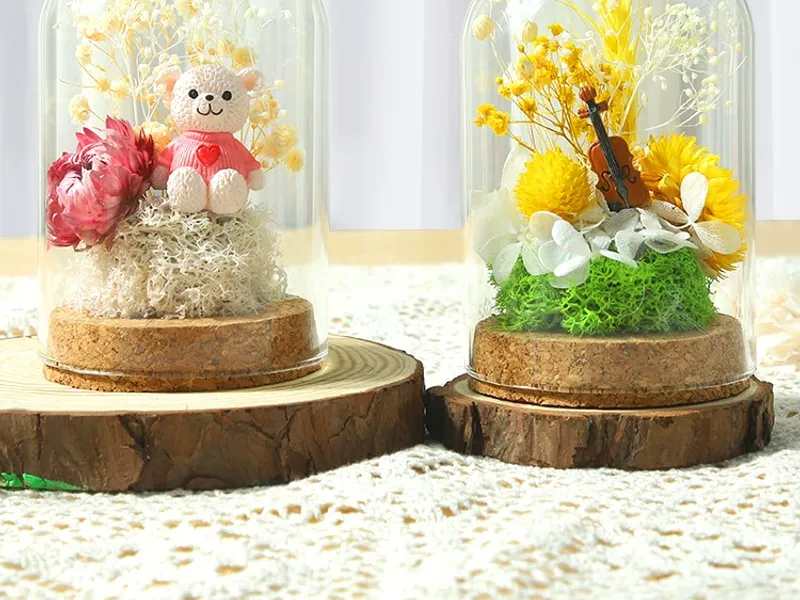
Preserved Dry Flowers Glass Dome Ornament DIY Craft Kit for Wholesale
Complete preserved flower glass dome kit pairing real dried botanicals with a 12cm borosilicate cloche and solid wood base. Assembles in 25 minutes with no glue gun, no drying time, and no floral skill required.
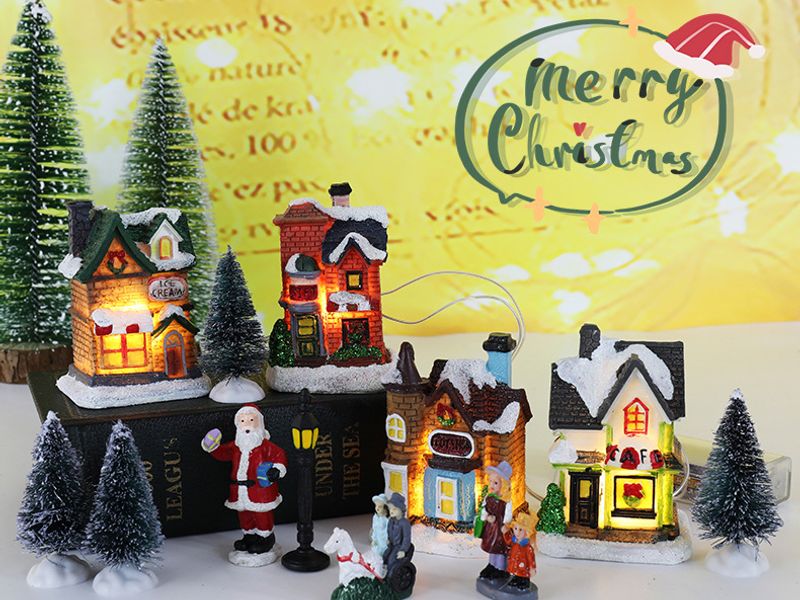
Resin Light-Up Christmas Village House Set 12-Piece Miniature Décor
12-piece resin Christmas village house set with built-in warm-white LED lighting. Pre-painted miniature cottages with snow-dusted roofs, flicker-free glow, and battery-powered operation — ready-to-sell décor for Amazon FBA sellers, gift shops, and subscription boxes.
Need Home Decoration Solutions?
Our team can develop custom craft kit solutions for your specific home decoration requirements.
Request a Quote