
DIY Making
Technical Description
DIY Making at a Glance
DIY Making is the craft-kit application built around melt-and-pour soap, candle pouring, and air-dry clay sculpting — hands-on projects where the customer assembles, colors, scents, and finishes the product themselves. For a wholesale buyer, the category matters because it converts a one-time purchase into a complete experience: the kit contains every consumable and tool needed to finish a usable item, which is exactly why Amazon sellers and subscription boxes keep coming back to it. A soap or candle kit is not a single component that sits on a shelf; it is a packaged activity with a guaranteed endpoint, and that certainty drives both first-time purchases and the repeat orders that follow when the customer wants to make another batch.
Demand in this application has stayed consistently strong since the craft boom of the early 2020s, and it now runs on two parallel tracks. The first is gifting: soap and candle kits are bought for birthdays, housewarmings, Mother's Day, and teacher gifts, usually landing in the USD 12.99–19.99 retail band, where the perceived value of "a box of molds, oils, and tools" comfortably exceeds the production cost. The second track is experience-driven self-purchase — weekend hobbyists, home entertainers, and parents looking for screen-free activities for children. Short-form video platforms have accelerated this: a 30-second clip of a grape-shaped soap popping out of a silicone mold is among the most reliably viral craft content, and it converts directly into sales for retailers who list matching kits. Buyers who stock this application also benefit from its merchandising flexibility: the same factory line can produce a soap kit, a candle kit, and a clay kit under one purchase order, which lowers sourcing overhead compared to assembling components from multiple suppliers.
For B2B buyers, the operational appeal of DIY Making is that a single SKU replaces a bill of materials. An Amazon seller does not need to source molds from one vendor, soap base from another, and packaging from a third; the finished kit arrives retail-ready, with instructions, gift bag, and tags included. That is why KitSnest structures this application around complete kits rather than loose components, and why wholesale buyers typically treat it as a high-velocity, high-margin complement to their core listings.
Best-Selling Kit Types
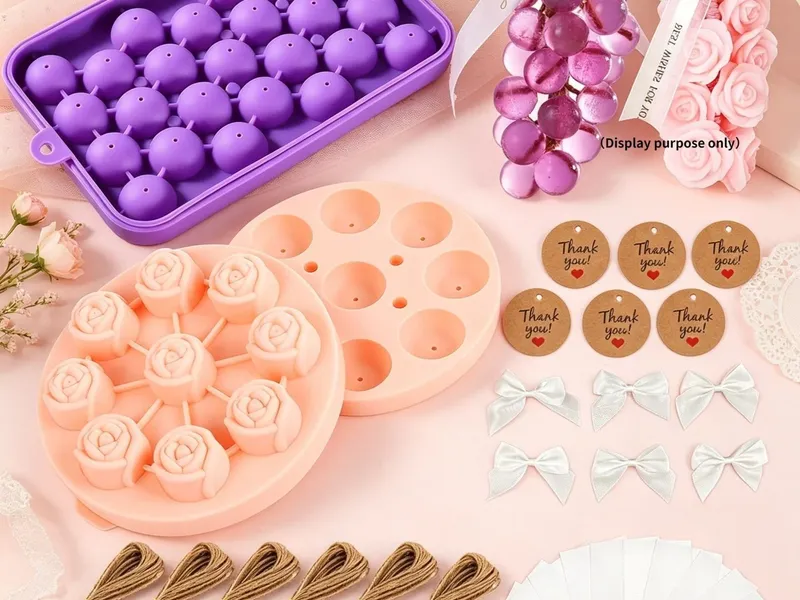
- DIY Soap Making Kit — 2 Silicone Molds (Grape & Rose) with Gift Bag & Tags: the flagship gifting SKU and the strongest performer across Amazon and gift-shop channels. Two molds mean two independent sessions, which raises perceived value and supports a higher retail price, while the included gift bag and tags let the buyer drop the kit straight into a gifting display without repackaging. At 500-unit wholesale pricing it typically lands in the USD 3.80–4.60 range against a USD 14.99–19.99 retail, giving sellers a 3–4x gross margin before advertising costs.
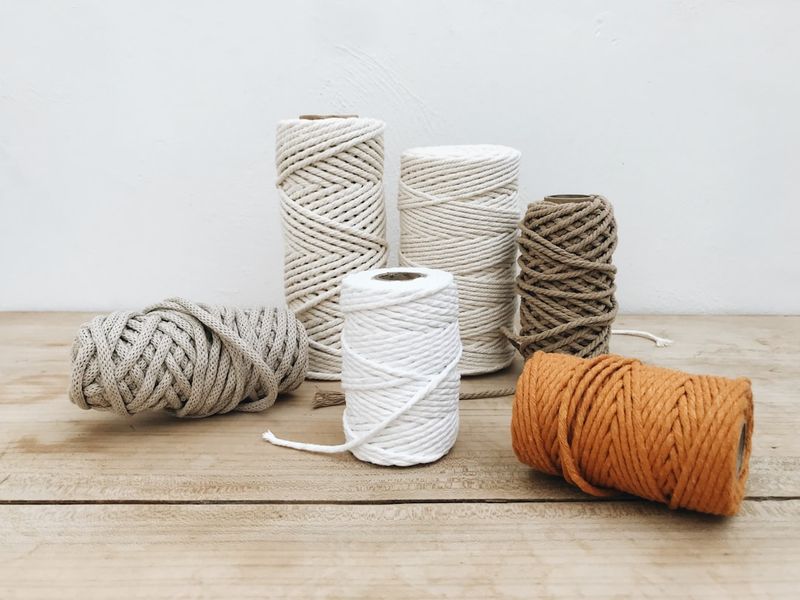
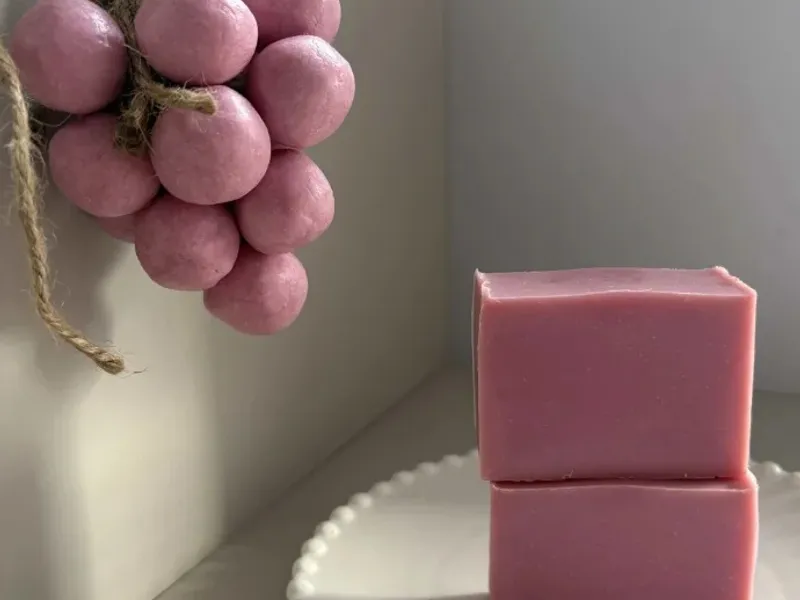
- Yilan Bailu DIY Grape Soap Making Kit — 500g Essential Oil Soap Base with 12m Hemp Rope: the natural-positioned variant. The 500g essential-oil soap base produces a larger single batch, and the 12m hemp rope turns the finished bar into a hangable, gift-ready product. This SKU speaks to the clean-beauty trend and performs best on Amazon listings where "natural," "essential oil," and "no harsh additives" appear in the copy.
- Melt-and-Pour Candle Making Kits: complete candle kits pairing soy or paraffin wax with wicks, fragrance oils, and pour-safe containers. They sell year-round but peak from September to December, and they are the natural upsell for buyers already stocking soap kits — the two share customers and a production line.
- Scented Candle Kits with Embedded Decor: kits where dried flowers, botanical elements, or color chips are embedded in clear wax. These photograph extremely well, which makes them favorites for Etsy sellers and boutique gift shops that rely on visual merchandising.
- Air-Dry Clay & Sculpting Kits: clay blocks with sculpting tools and finishing supplies, aimed at kids' activity sets and adult hobbyists alike. They are the highest-frequency subscription-box component in this application because each box can feature a different project theme without changing the core SKU structure.
- Custom Seasonal & Holiday Kits: Christmas, Valentine's, and Mother's Day themed variants of any of the above, built around seasonal molds and packaging. These are typically ordered 90–120 days ahead of the holiday and give distributors a way to refresh best sellers without developing entirely new products.
Wholesale Considerations
| Factor | Guidance |
| MOQ | 300 units per SKU for stock kits; 500 units for OEM/private-label runs. Mixed-container orders from 1,000 units across Soap Making Kits, Candle Making Kits, and Clay & Sculpting Kits are welcome, which keeps per-unit freight low even on a first test order. |
| Packaging | Stock kits ship retail-ready with printed boxes, instructions, gift bags, and tags. For OEM, box dimensions, logo, copy, and inserts can all be adjusted; a packaging change is included within the 500-unit OEM MOQ. Individual kits are poly-bagged and master-cartoned at 24–48 units per carton, with carton weight kept under 25 kg to avoid carrier surcharges. |
| Seasonal Timing | Soap and clay kits are year-round; candle kits and holiday variants concentrate demand in Q3–Q4. For Christmas seasonal stock, place orders by July–August; for Valentine's and Mother's Day, order November–January. Production slots fill 4–6 weeks out, so seasonal pricing locks in better with an early PO. |
| OEM/Customization | Private-label options include custom packaging, your brand on the box and tags, mold shape changes, scent and color selection, and ingredient swaps such as goat-milk or shea-butter soap base. Custom molds carry a one-time tooling fee of roughly USD 300–800 and add 7–15 days to the lead time. |
| Margin Notes | Wholesale entry points of USD 3.20–4.60 for soap kits and USD 3.00–5.00 for candle and clay kits support 3–4x retail markups at USD 12.99–19.99. Kits with premium positioning — essential-oil bases, embedded botanicals, gift-ready packaging — hold retail price better than plain melt-and-pour sets, so margin protection starts with the SKU mix, not the price tag. |
Sourcing & Supply
Working directly with a Chinese manufacturer like KitSnest removes the component-sourcing problem entirely, but it only pays off if the buyer manages quality, lead time, and shipping deliberately. The standard workflow is: approve a pre-production sample (physical sample shipped in 5–7 days, or photo/video sample in 1–2 days), place the order against a 30% deposit, receive production updates at milestone checkpoints, and take delivery 15–25 days after approval for typical runs of 300–5,000 units. Everything — molds, soap base, essential oils, hemp rope, packaging, and instruction cards — is consolidated at one factory, so there is a single QC standard and a single point of accountability rather than a chain of vendors each blaming the other.
- Quality control: insist on pre-production samples and a mid-production inspection at 50–70% completion. KitSnest tests melt-and-pour soap bases for consistency and fragrance retention, drop-tests packaged kits, and checks color-accurate printing on boxes and tags against a physical proof. For Amazon sellers, verifying that components and packaging meet marketplace documentation requirements — ingredient lists, safety labeling, and product weight — happens before shipment, not after an A-to-Z claim.
- Lead times: stock kits run 15–20 days from deposit to completion; OEM runs with custom molds or packaging run 20–30 days. Budget 3–5 days for production sampling and approval before the clock starts, and add 25–35 days sea freight to the US West Coast, 35–45 days to the East Coast, or 7–10 days by air for restocks and seasonal rush orders.
- Shipping: for orders above 1,000 units, sea freight via FOB Ningbo or Shanghai is the standard and cheapest route; KitSnest can also quote DDP to US and EU addresses, which caps your landed cost at a single number and is popular with first-time importers. Air freight is reserved for emergency restocks because the freight premium quickly eats the margin gain.
- Payment and terms: standard terms are 30% deposit with 70% balance before shipment, with T/T as the default. Buyers with an established order history can negotiate L/C or a deposit reduction on repeat business; the same is true for freight consolidation — mixing the three related categories into one container lowers per-SKU landed cost noticeably.
Related Products (2)
DIY Soap Making Kit — 2 Silicone Molds (Grape & Rose) with Gift Bag & Tags
Complete melt-and-pour soap making kit featuring 2 food-grade silicone molds in grape cluster and rose bloom designs, 500g clear soap base, colorants, fragrance, and ready-to-gift packaging with kraft bag and hang tags. Zero extra tooling required — buyers unbox, melt, pour, and gift.
Yilan Bailu DIY Grape Soap Making Kit — 500g Essential Oil Soap Base with 12m Hemp Rope
Complete grape-shaped DIY soap making kit built around a 500g essential oil melt-and-pour soap base and 12m natural hemp rope. Includes silicone grape molds, colorants, fragrance oil, and illustrated instructions for 8-10 finished bars.
Need DIY Making Solutions?
Our team can develop custom craft kit solutions for your specific diy making requirements.
Request a Quote