
Whether you're stocking a craft retail store, sourcing for subscription boxes, or running soap-making workshops at scale, understanding the price gap between wholesale and retail soap making kits is essential to protecting your margins. The difference isn't just about volume — it's about packaging configuration, MOQ tiers, private-label options, and what's actually included per unit. This guide breaks down the key cost drivers as of 2026, draws direct comparisons between the two buying channels, and explains which scenarios genuinely justify a wholesale commitment versus a retail purchase.
The Core Problem: Why Retail Soap Kit Pricing Doesn't Scale
Why Per-Unit Retail Costs Break B2B Budgets
Retail soap making kits are priced for individual consumers — each unit absorbs the full cost of branded packaging, retail markup, distributor margin, and fulfillment overhead. When a workshop organizer, subscription box curator, or craft retailer buys kits one at a time through consumer channels, they're effectively paying 2–4x the landed manufacturing cost.
The Hidden Layers in Retail Pricing
- Branded retail packaging adds significant per-unit cost with no resale value to a B2B buyer
- Distributor and retailer margins typically stack 30–60% on top of the factory price
- Small-quantity shipping further erodes per-unit economics
- No customization: retail SKUs are fixed — you cannot adjust mold type, soap base weight, or packaging to match your brand
A Concrete Example
Consider a kit like the Yilan Bailu DIY Grape Soap Making Kit — 500g Essential Oil Soap Base with 12m Hemp Rope: at MOQ 50 units, bulk pricing and custom packaging become available directly from source. Buying equivalent kits through retail channels at quantities below MOQ means absorbing full consumer-channel markups with zero flexibility on packaging or branding.
Compared to sourcing retail kits piecemeal, a structured wholesale purchase at 50+ units can realistically reduce per-unit landed cost by 30–50%, depending on configuration and destination market.
Wholesale vs Retail Soap Making Kits: Direct Comparison
Side-by-Side Buying Channel Analysis
The table below compares the two buying channels across the factors that matter most to B2B buyers as of 2026.
| Factor | Retail Purchase | Wholesale Purchase |
| **MOQ** | 1 unit | Typically 50–100 units |
| **Per-Unit Cost** | Full consumer price | Reduced bulk rate |
| **Packaging** | Fixed retail box | Customizable / private-label available |
| **Branding** | Supplier's brand | Your brand (at 100+ units) |
| **Mold/Component Options** | SKU as listed | Configurable at source |
| **Customs & Import Docs** | Handled by retailer | Buyer-managed (direct import) |
| **Soap Base Weight** | Fixed (e.g. 500g) | Adjustable by negotiation |
| **Mixed Assortments** | Limited | Available with volume tiers |
Key Wholesale Thresholds to Know
- 50 units: Entry-level wholesale MOQ for kits such as the DIY Soap Making Kit — 2 Silicone Molds (Grape & Rose) with Gift Bag & Tags, which includes food-grade BPA-free silicone molds producing 80–100g bars per cavity
- 100 units: Mixed mold assortments and private-label packaging unlock at this tier
- 200+ units: Custom mold development and full OEM packaging are viable
What Changes at Each Tier
- At 50 units: bulk pricing applies, standard wholesale packaging ships
- At 100 units: mixed-design assortments available, custom hang-tags or inserts can be added
- At 200+ units: full private-label development is economically justified, including custom outer cartons, branded instruction booklets, and exclusive colorways
What's Actually Inside a Wholesale Soap Making Kit
Component-Level Breakdown
Understanding what a wholesale soap kit contains — and what you can change — is critical to accurate cost modeling. Using KitsNest's sourced kits as reference:
Yilan Bailu DIY Grape Soap Making Kit
- Soap base: 500g essential oil soap base, pre-formulated with moisturizing agents and gentle surfactants; no lye required (safe for workshop use)
- Hemp rope: 12 meters natural unbleached hemp rope, ~2–3mm thickness for tying and decorative wrapping
- Design: Translucent green grape cluster — realistic fruit-like appearance, suitable for gifting and retail display
- Skin compatibility: Normal to oily skin types; aromatherapy fragrance included
- Brand origin: Yilan Bailu (伊兰百露), a 12-year cosmetics brand from Foshan City specializing in handmade soap and DIY beauty products
- MOQ: 50 units with bulk pricing and custom packaging for distributors and workshop organizers
DIY Soap Making Kit — 2 Silicone Molds (Grape & Rose)
- Molds: 2 food-grade silicone molds — grape cluster (~24 cavities) and rose flower (~10–14 cavities)
- Material spec: BPA-free, heat-resistant -40°F to 440°F, compatible with melt-and-pour, cold process, and hot process methods
- Bar output: Each cavity produces 80–100g soap bars
- Accessories: Gift bag (~20×15cm), decorative gift tags (10–20 pieces)
- MOQ: 50 units; mixed mold assortments from 100+ units
Comparing Kit Formats for B2B Use Cases
| Use Case | Recommended Kit Format | Minimum Viable Quantity |
| Craft workshop (single session) | Mold + soap base bundle | 50 units |
| Subscription box insertion | Compact mold-only kit | 100 units (mixed assortment) |
| Retail shelf product | Private-label full kit | 200 units |
| Educational program | No-lye base + molds | 50 units |
| Gift set / seasonal collection | Themed design (grape/rose) | 50 units |
When Wholesale Makes Financial Sense — And When It Doesn't
Scenarios Where Wholesale Wins
Wholesale sourcing for soap making kits is the right move when:
- Recurring volume: You run monthly workshops, fulfill subscription box SKUs, or restock a retail shelf regularly — the 50-unit MOQ amortizes quickly
- Branding matters: At 100+ units, private-label packaging eliminates supplier branding and creates a cohesive product line
- Component customization: You need a specific soap base weight, mold design, or accessory bundle that retail SKUs don't offer
- Export or resale: You're an Amazon Seller, Retail Ready operator, or Subscription Box curator who needs consistent unit economics
Scenarios Where Retail May Still Apply
- One-off events: A single workshop under 30 participants may not justify a 50-unit MOQ commitment
- Product testing: Before committing to a wholesale run, ordering 1–5 retail units to validate the design and participant experience is a reasonable step
- Rapid prototyping: When testing a new kit concept before scaling, retail sampling is faster than a custom wholesale development cycle
The Breakeven Logic
For Wholesale Craft Kits buyers, the breakeven point between retail and wholesale typically occurs around 40–60 units, depending on shipping distance and customs duties. Beyond that threshold, the per-unit economics of wholesale improve consistently with scale — particularly for export-quality kits sourced directly from Ningbo or Foshan-origin suppliers.
Unlike purchasing pre-assembled kits through domestic retail channels, sourcing directly at 50+ units also gives you full control over QC documentation, batch consistency, and packaging compliance for your target market.
Choosing the Right Soap Kit Category for Your Channel
Matching Kit Type to Buyer Profile
Not all soap making kits serve the same buyer. The Soap Making Kits category includes formats suited to different trade channels:
For Workshop & Education Buyers
- Prioritize no-lye soap bases (safer for group settings, no chemical handling certification required)
- Look for kits with multi-cavity molds (24-cavity grape molds yield more output per session than single-bar formats)
- A 500g soap base supports approximately 5–6 standard bars per participant in a workshop context
- Pair with Educational Craft Kits solutions for school or community program compliance
For Subscription Box & Amazon Sellers
- Compact mold-only kits (molds + tags + gift bag) keep dimensional weight low for fulfillment efficiency
- BPA-free, food-grade silicone molds are a strong product claim for health-conscious consumers
- Mixed assortments (grape + rose) available at 100+ units allow SKU variety without separate wholesale agreements
- Review Subscription Box Kits and Amazon Seller Kits for channel-specific packaging guidance
For Retail & Gift Buyers
- Themed seasonal designs (grape cluster, rose flower) perform well in gift collections and holiday retail windows
- At 200+ units, custom outer carton printing and branded instruction booklets align the kit with your store's visual identity
- The included gift bag and decorative tags in the 2-mold kit format reduce retail packaging cost by eliminating the need for additional gift wrapping materials
Complementary Categories to Consider
Buyers sourcing soap kits wholesale often expand into adjacent craft categories:
- Candle Making Kits — natural pairing for bath and body gift sets; see also the Christmas DIY Candle Wick Trimmer & Snuffer Tool Set for add-on accessories
- Resin Art Kits — popular for subscription box variety
- Gift Collections — curated multi-kit bundles for seasonal retail
Frequently Asked Questions
What is the minimum order quantity (MOQ) for wholesale soap making kits?
For KitsNest's soap making kits, the standard wholesale MOQ is 50 units per SKU. This applies to both the Yilan Bailu DIY Grape Soap Making Kit and the DIY Soap Making Kit with 2 Silicone Molds. At 50 units, bulk pricing and standard wholesale packaging are available. Mixed mold assortments unlock at 100+ units, and full private-label or OEM packaging is available at 200+ units. For buyers running smaller events, retail-channel sampling (1–5 units) is an option before committing to a wholesale run.
How much cheaper are wholesale soap making kits compared to retail?
The per-unit cost difference between wholesale and retail sourcing for soap making kits typically ranges from 30–50% lower at the 50-unit MOQ tier, increasing further at higher volumes. Retail pricing absorbs distributor margins (commonly 30–60% markup), branded consumer packaging, and small-quantity fulfillment costs — none of which add value for a B2B buyer. Wholesale sourcing eliminates these layers. The exact savings depend on kit configuration, shipping destination, and customs duties for your market. We recommend requesting a formal wholesale quote to compare landed costs for your specific volume and geography.
Can I get private-label or custom packaging on wholesale soap making kits?
Yes. Custom and private-label packaging is available on soap making kits at 100+ units for basic customization (hang tags, inserts, outer bag branding) and at 200+ units for full OEM development including custom outer cartons, branded instruction booklets, and exclusive colorway or design selection. The Yilan Bailu Grape Soap Kit and the 2-Mold Soap Kit both support custom packaging for distributors and workshop organizers. Contact KitsNest's wholesale team with your volume, target market, and branding requirements to receive a tailored proposal.
Are the soap bases in wholesale kits safe for workshop and educational use?
The Yilan Bailu DIY Grape Soap Making Kit uses a no-lye, ready-to-melt soap base — pre-formulated with natural essential oils and gentle surfactants. No lye handling is required, which makes it appropriate for group workshop settings without chemical-handling certifications. The soap base is suitable for normal to oily skin types. The silicone molds in the 2-Mold Kit are BPA-free and food-grade, heat-resistant from -40°F to 440°F, and compatible with melt-and-pour, cold process, and hot process methods. For educational programs, pairing with no-lye bases is the standard current-industry recommendation as of 2026.
What's the difference between the Grape Soap Kit and the 2-Mold Soap Kit for wholesale buyers?
The two kits serve different wholesale use cases. The Yilan Bailu Grape Soap Kit is a complete bundle — it includes 500g soap base and 12m hemp rope, making it ready-to-use for workshops or gifting without the buyer sourcing additional materials. It's best for workshop operators and gift set assemblers. The 2-Mold Soap Kit (Grape & Rose) is a mold-plus-accessories format — it includes 2 silicone molds (approximately 24 grape cavities and 10–14 rose cavities), a gift bag, and decorative tags, but no soap base. It's better suited for subscription box curators or retailers who source their own soap base and want to offer participants or customers the mold as the hero product. Both have a 50-unit MOQ, and both support private-label development at scale.
Related Resources
Related Products (2)
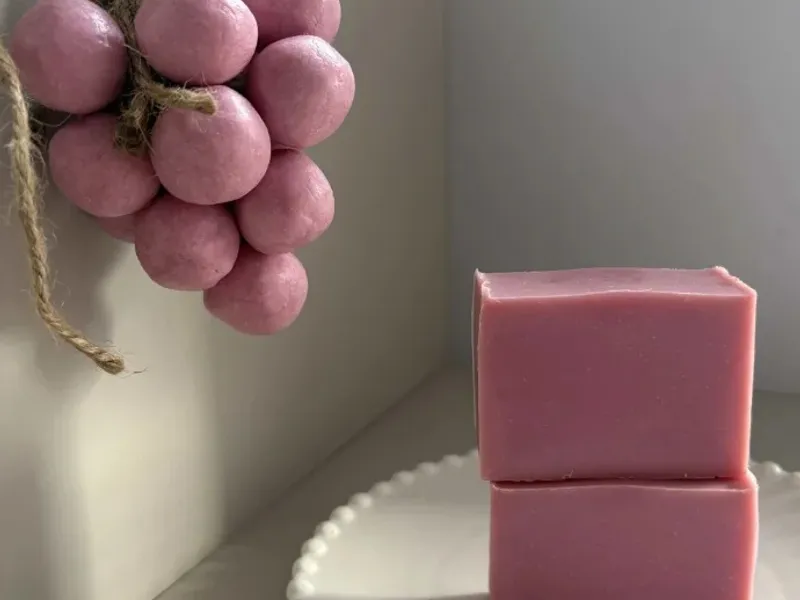
Yilan Bailu DIY Grape Soap Making Kit — 500g Essential Oil Soap Base with 12m Hemp Rope
Complete grape-shaped DIY soap making kit built around a 500g essential oil melt-and-pour soap base and 12m natural hemp rope. Includes silicone grape molds, colorants, fragrance oil, and illustrated instructions for 8-10 finished bars.
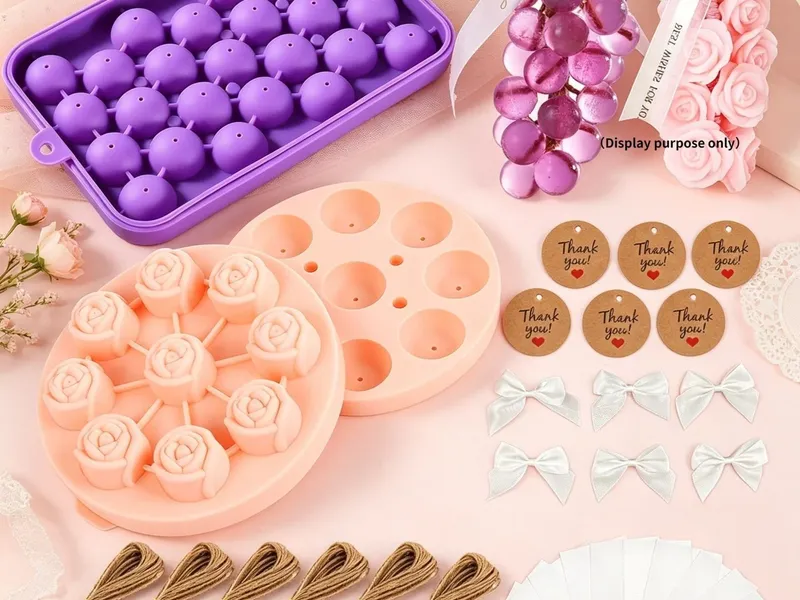
DIY Soap Making Kit — 2 Silicone Molds (Grape & Rose) with Gift Bag & Tags
Complete melt-and-pour soap making kit featuring 2 food-grade silicone molds in grape cluster and rose bloom designs, 500g clear soap base, colorants, fragrance, and ready-to-gift packaging with kraft bag and hang tags. Zero extra tooling required — buyers unbox, melt, pour, and gift.
Related Collections
Related Solutions
Understand the real cost difference between wholesale and retail soap making kits — and when bulk ordering makes sense for your business
Request a Wholesale Soap Kit Quote Today