
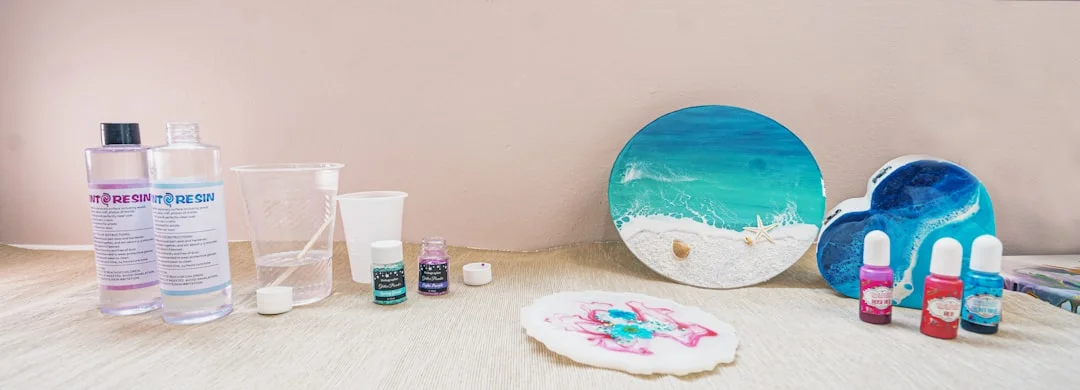
Sourcing resin art kits at wholesale scale is not simply a matter of finding the lowest unit cost. Wholesale buyers — whether stocking retail shelves, curating subscription boxes, or supplying educational programs — need kits that arrive complete, photograph well, perform consistently across batches, and carry packaging that reflects the end customer's expectations. As of 2026, the global DIY craft market continues to expand, and resin art remains one of the fastest-growing subcategories. This guide walks through every evaluation criterion that matters: component quality, kit configuration, MOQ tiers, packaging options, and the supplier questions that separate reliable partners from one-off vendors.
Why Resin Art Kits Require a Different Wholesale Approach
The Challenge of Sourcing Resin Kits in Bulk
Resin art kits differ from passive craft supplies because they involve reactive chemistry. A silicone mold, a pigment pod, or a UV lamp sourced from mismatched suppliers can produce inconsistent cure results across your customer base — generating returns, negative reviews, and support burden at scale.
Unlike sourcing, say, a set of embroidery hoops, every component in a resin kit must be chemically and dimensionally compatible:
- Resin-to-hardener ratio must match the included mixing cups (typically 1:1 or 2:1 by volume)
- Pigment concentration must suit the resin viscosity — high-viscosity resins require pigment pastes, not water-based dyes
- Mold release area must correspond to the resin volume in the kit (a standard 200ml resin kit needs molds with a combined cavity volume of at least 180–220ml)
- Cure time printed on instructions must align with the actual resin formulation batch — not a generic template
Wholesale vs. Retail Kit Expectations
| Criterion | Retail Single-Unit Kit | Wholesale / Bulk Kit |
| Packaging | Display-ready, branded retail box | Inner carton + master carton; private label optional |
| MOQ | 1 unit | Typically **50–200+ units** per SKU |
| Component consistency | Single batch | Multi-batch; requires batch-to-batch QC |
| Instructions | Consumer-friendly | Can include bulk insert cards or QR-code instructions |
| Customization | None | OEM logo, color mix, kit configuration |
Compared to sourcing loose resin supplies separately, pre-assembled kits cut wholesale buyer preparation time by roughly 60% and reduce per-unit packaging labor significantly — a meaningful efficiency gain when you are processing orders of 500 units or more.
Key Components to Evaluate in Every Resin Art Kit
What a Complete Wholesale Resin Art Kit Should Include
Before placing a bulk order, audit the kit's component list against this standard checklist. A kit missing even one functional element will generate end-customer complaints.
Resin & Hardener
- Type: Epoxy (slow cure, 24–72 hrs), UV resin (cure in 2–5 minutes under UV lamp), or polyester resin
- Volume: Entry-level kits typically include 100–200ml total resin; intermediate kits 300–500ml
- Safety compliance: Confirm SDS (Safety Data Sheet) availability; low-odor or non-yellowing formulas are preferred for retail and educational channels
- Shelf life: Most epoxy resins have a 12-month shelf life from manufacture date — verify batch freshness before committing to large stock
Molds
- Material: Food-grade silicone (BPA-free, heat-resistant -40°F to 440°F) releases cured resin cleanly; avoid cheaper TPR molds that degrade after 20–30 uses
- Design variety: Geometric, floral, jewelry-scale (cabochon, pendant), and decorative object molds each serve different retail verticals
- Cavity count per mold: Jewelry kits typically include molds with 8–24 cavities; decorative object molds typically 2–6 cavities
Accessories & Consumables
- Graduated mixing cups (minimum 2–4 per kit)
- Wooden or silicone stir sticks
- Glitter, dried botanicals, or foil flakes (pigment type must match resin type)
- Nitrile gloves (at least 1 pair — non-negotiable for safety compliance in most markets)
- UV lamp (for UV resin kits): check wattage — 36W lamps cure standard UV resin in 2–3 minutes; lower-wattage lamps extend cure time and increase failure rate
Component Substitution Red Flags
- Polystyrene mixing cups included with epoxy resin (epoxy dissolves polystyrene)
- Water-soluble dyes included for non-aqueous resin
- Instructions referencing a different brand's cure times
- Missing safety gloves in kits targeting educational or children's channels
A supplier who cannot provide a full component manifest and corresponding SDS documents before order placement is a supply chain risk.
MOQ, Packaging, and Configuration Options for Bulk Orders
Understanding MOQ Tiers for Resin Art Kits
MOQ structures for wholesale resin art kits vary significantly based on whether you are ordering standard catalog kits or custom/OEM configurations:
| Order Type | Typical MOQ | Notes |
| Standard catalog kit | **50–100 units** per SKU | Mix-and-match assortments often available |
| Private label (your brand) | **100–200 units** per SKU | Requires brand asset submission |
| OEM / custom kit config | **200–500 units** | Custom mold shapes add tooling lead time |
| Subscription box assortment | **50 units per theme** | Monthly theme rotation common |
For buyers entering the resin kit category for the first time, starting with a 50-unit trial order across 2–3 SKUs allows you to validate end-customer response before committing to a full seasonal buy.
Packaging Formats That Affect Retail Performance
Packaging is not cosmetic — it directly affects sell-through rate on retail shelves and unboxing satisfaction in subscription box channels.
- Window box: Displays kit contents visibly; strong for gift retail and impulse purchases
- Kraft mailer box: Eco-aesthetic; performs well in subscription box and online DTC channels
- Inner carton + master carton: Standard export format; 12 or 24 units per inner carton is the most common configuration for international wholesale
- Hang-tag ready: Essential for pegboard retail display; confirm hole punching spec (6mm standard Euro slot)
Custom vs. Standard Kit Configurations
Standard kits are faster to sample and stock, but custom configurations command higher retail margins. When evaluating OEM options, confirm:
- Whether the supplier can modify resin volume, mold selection, and pigment palette within one kit SKU
- Minimum custom development quantities
- Whether instruction inserts can be localized (English, French, German, Spanish) for export-market orders
For seasonal and holiday channels, look for suppliers who update kit themes quarterly — a resin art kit designed around a winter village or floral botanical theme will outsell a generic geometric kit in gift retail by a significant margin.
Evaluating Supplier Reliability for Ongoing Wholesale Sourcing
Supplier Due Diligence Checklist
A single successful sample order does not guarantee reliable ongoing supply. For wholesale resin art kits specifically, evaluate suppliers on these operational dimensions:
Batch-to-Batch Consistency
Resin formulations can vary between production batches if the supplier sources raw materials from multiple chemical distributors. Request batch certificates showing resin viscosity (measured in mPa·s), mix ratio, and pot life for each production run. A viscosity variance of more than ±10% between batches will produce visible differences in end customer results.
Component Sourcing Transparency
Ask specifically:
- Are silicone molds manufactured in-house or sourced from a sub-supplier?
- Is the resin formulated in-house or re-labeled from a chemical manufacturer?
- Are pigments and inclusions (glitter, botanicals) from a consistent single source?
Suppliers with vertically integrated or tightly controlled supply chains offer meaningfully lower batch-to-batch variance than assemblers who aggregate components from open markets.
Export and Compliance Readiness
For North American and European wholesale buyers, confirm:
- REACH compliance for resin components (EU requirement)
- ASTM D-4236 labeling compliance for art materials (US requirement for retail)
- SDS documents in destination-market language
- Prop 65 compliance documentation if selling into California
Reorder Lead Times and Inventory Position
As of 2026, supply chain normalization has improved lead times industry-wide, but resin raw material availability remains sensitive to petrochemical market fluctuations. Confirm whether your supplier:
- Holds 30–60 days of finished goods inventory for standard SKUs
- Provides advance notification of material shortages
- Offers blanket order programs with scheduled releases
Questions to Ask Before Your First Bulk Order
- What is the maximum batch size you can produce in a single production run?
- Do you provide pre-shipment inspection reports?
- Can I visit or conduct a virtual audit of your assembly facility?
- What is your defect rate policy (replacement threshold, process)?
Suppliers who answer these questions with specific numbers and documented processes — rather than general assurances — are the ones worth building long-term wholesale relationships with.
Matching Resin Art Kit Types to Your Sales Channel
Choosing the Right Kit Format for Each Channel
Not every resin art kit configuration performs equally across all wholesale buyer verticals. Channel fit is one of the most overlooked variables in wholesale kit selection.
| Sales Channel | Best Kit Format | Key Criteria |
| Amazon / E-commerce | Complete beginner kit, window box | FBA-compliant dimensions; high image appeal; **4.5-star+ review history** |
| Specialty craft retail | Intermediate / theme kits | Unique mold designs; seasonal relevance; hang-tag packaging |
| Subscription boxes | Compact single-project kits | Fits **standard 30x20x10cm** subscription mailer; monthly theme rotation |
| Educational / classroom | Non-toxic UV resin kits | ASTM-compliant; age-appropriate (typically **14+** for resin); wipe-clean molds |
| Gift retail / boutique | Decorative output kits | Premium packaging; giftable output (jewelry, ornaments, décor objects) |
| Corporate gifting / team building | Themed experience kits | Branded packaging available; output suitable for desk or home display |
Seasonal Demand Patterns for Resin Kits
As of 2026, resin art kit demand follows a predictable seasonal curve that wholesale buyers should incorporate into their purchasing calendar:
- Q4 (Oct–Dec): Peak demand — holiday ornament and gift-focused resin kits; order 10–12 weeks ahead
- Q1 (Jan–Feb): Valentine's and gifting themes; jewelry and heart-shaped mold kits perform strongly
- Q2 (Apr–Jun): Spring/floral themes; botanical inclusion kits with dried flower embeds
- Q3 (Jul–Sep): Back-to-school and classroom kits; educational channel replenishment
For buyers serving the Resin Art Kits category, pairing resin kits with complementary product lines — such as Clay & Sculpting Kits or Painting & Drawing Kits — increases average order value and reduces single-category inventory risk. Wholesale buyers supplying Subscription Box Kits in particular benefit from a rotating multi-category kit strategy rather than relying on a single craft discipline year-round.
Frequently Asked Questions
What is a reasonable MOQ when ordering resin art kits wholesale for the first time?
For standard catalog resin art kits, most wholesale suppliers accept initial orders of 50–100 units per SKU. This threshold balances the supplier's production economics with the buyer's need to validate market demand before committing to larger inventory. If you require private-label packaging or OEM kit configuration, expect MOQ to rise to 100–200 units minimum, as custom packaging and assembly setup add fixed costs that need to be amortized across the batch. For buyers testing multiple SKUs simultaneously, many suppliers offer mixed-assortment programs that allow you to reach a combined MOQ across several kit types rather than meeting the minimum on each individual SKU.
How do I verify that a resin art kit is safe for retail or educational use?
Request the SDS (Safety Data Sheet) for the resin and hardener components before ordering. For retail sale in the US, kits sold as art materials must comply with ASTM D-4236 (chronic hazard labeling standard). For the EU, resin components must meet REACH regulation requirements. For educational or classroom use, confirm the kit is rated for the intended age group — most epoxy resin kits are appropriate for ages 14 and above due to chemical handling requirements; UV resin kits with low-odor formulas may be suitable for supervised use with younger students depending on local regulations. Never accept a supplier's verbal compliance assurance — request the actual documentation.
What is the difference between epoxy resin kits and UV resin kits for wholesale purposes?
The primary wholesale-relevant differences are cure time, component complexity, and end-customer experience. Epoxy resin kits use a two-part system (resin + hardener, typically 1:1 or 2:1 ratio) that cures over 24–72 hours at room temperature — no additional equipment required, but the extended cure time means slower project completion and more room for user error. UV resin kits use a single-part resin that cures in 2–5 minutes under a UV lamp (typically 36W); the faster feedback loop makes them popular for beginner and subscription box markets. From a logistics perspective, UV resin kits require a UV lamp as a kit component, which adds weight and bulk to the package — factor this into your FBA dimension calculations or shelf-space planning for retail.
Can resin art kits be private-labeled or custom-packaged for my brand?
Yes — most established wholesale resin art kit suppliers offer private label and OEM options. At the packaging level, private labeling typically requires 100+ units and involves applying your brand's logo and design to standard kit packaging. Full OEM customization — where you specify the mold selection, resin volume, pigment palette, and instruction design — generally requires 200–500 units depending on the complexity of changes. For subscription box buyers, branded insert cards (rather than fully rebranded packaging) are often the most cost-effective customization option and can typically be arranged at 50-unit order levels. Always request a pre-production physical sample for approval before the full production run begins.
How should I evaluate batch-to-batch consistency when sourcing resin kits from overseas suppliers?
Request batch certificates with each production order, showing the resin viscosity (in mPa·s), mix ratio confirmation, and pot life test results. A reliable supplier should be able to demonstrate that these values remain within ±10% of the approved sample spec across batches. For silicone molds, request Shore A hardness specifications — most quality molds fall in the Shore A 20–40 range, which provides the right balance of flexibility for demolding and dimensional stability. Beyond documentation, place a small reorder of 10–20 units from a second production batch early in the relationship and compare cure results, mold release behavior, and color accuracy against your original sample before scaling up your inventory commitment.
Related Resources
Related Collections
Related Craft Families
Source smarter — evaluate kit quality, MOQ flexibility, and supplier reliability before committing to bulk resin art orders
Request Wholesale Resin Art Kit Samples Today